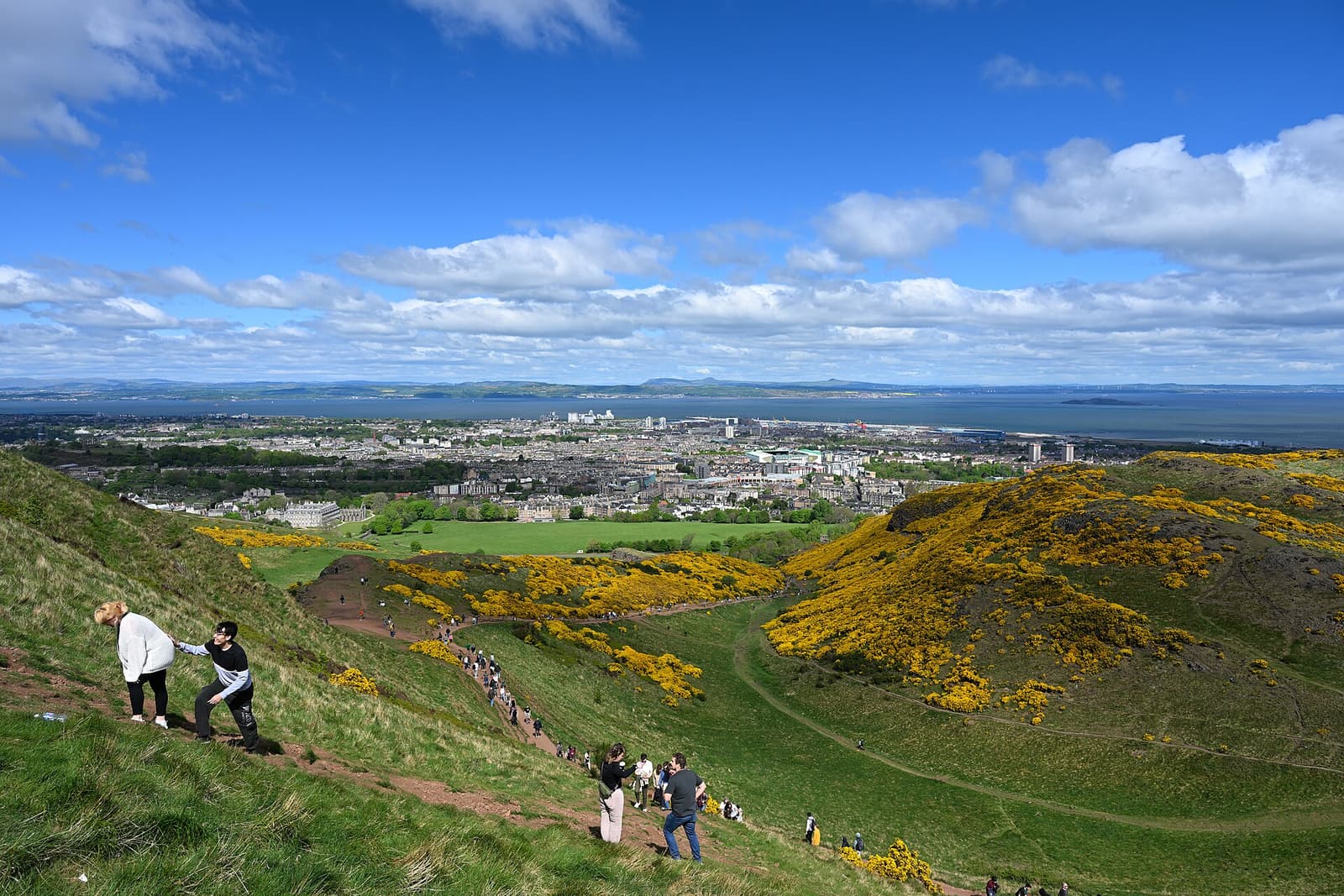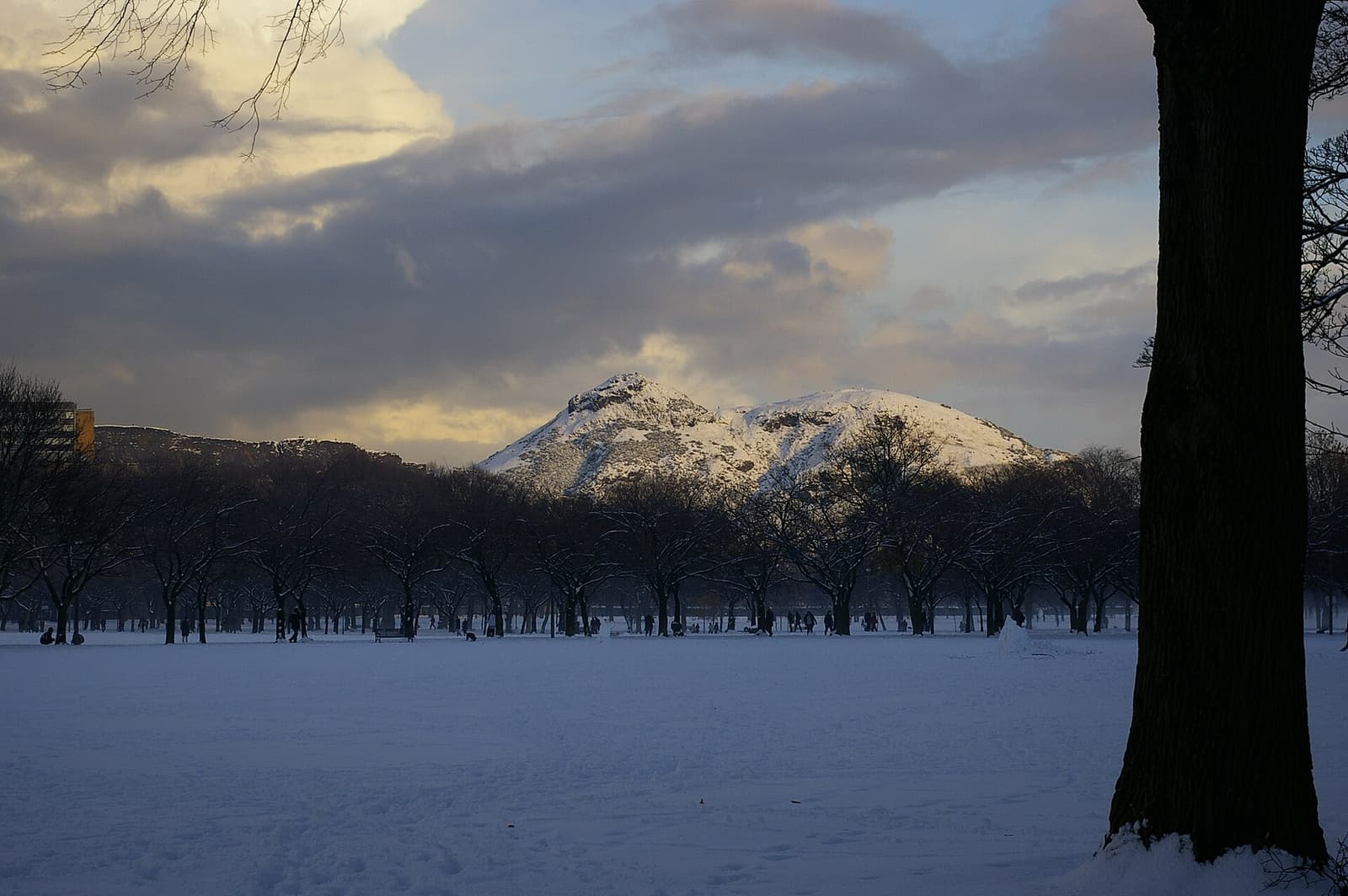
You can climb Arthur’s Seat on any day of the year. The best months are May, June and September: long days, the gorse in flower or the grass turning gold, and fewer people than in high summer. But the hill is at its most memorable at the edges of the day, in any season.
Season by season
Spring (March–May) is cool and bright, with the gorse at its yellow peak from April. Days lengthen fast. Summer (June–August) brings the warmest weather — typically 17–20°C — and daylight until ten at night, along with the biggest crowds, especially in August. Autumn (September–November) has clear air, low golden light and quieter paths; by November it is wet and windy. Winter (December–February) is cold, often around 2–7°C, with short days, and the summit rocks can be icy — but a calm, frosty morning on top is unforgettable.
Edinburgh’s weather is changeable in every month. Wind matters more than rain: check the forecast for gusts, and save the summit for a calmer day if you can.
| Months | Typical high | Daylight | On the hill |
|---|---|---|---|
| Dec – Feb | 6–8°C | 7–9 hours | Cold, possible ice; quiet; late sunrises |
| Mar – Apr | 9–12°C | 11–14 hours | Fresh, gorse coming into flower |
| May – Jun | 14–18°C | 16–17.5 hours | Best all-round; long evenings |
| Jul – Aug | 18–20°C | 15–17 hours | Warmest and busiest; festival season |
| Sep – Oct | 13–17°C | 10–13 hours | Clear light, autumn colour, fewer people |
| Nov | 8–10°C | 8–9 hours | Often wet and windy |
Sunrise and sunset
Edinburgh is far enough north for the length of the day to swing dramatically. Around midsummer the sun rises at about 4.30 am and sets at about 10 pm; around midwinter it rises at about 8.45 am and sets before 4 pm. That makes a winter sunrise surprisingly civilised and a summer sunset a late-evening outing.
For sunset, the sun goes down behind the castle and the Old Town, so the summit and the top of Salisbury Crags both face the show. For sunrise, the light comes up over the sea beyond Portobello and North Berwick Law. Leave Holyrood about an hour before the published time, carry a torch, and remember that you will be descending in poor light after sunset. Several guided hikes are timed for each.
May Day and Beltane
On the night of 30 April the Beltane Fire Festival fills Calton Hill with drummers, fire and painted performers. A few hours later, at dawn on 1 May, people climb Arthur’s Seat to wash their faces in the dew — a custom recorded for centuries and said to guarantee beauty for the year ahead. It is one of the most atmospheric mornings to be on the hill.
The August festivals
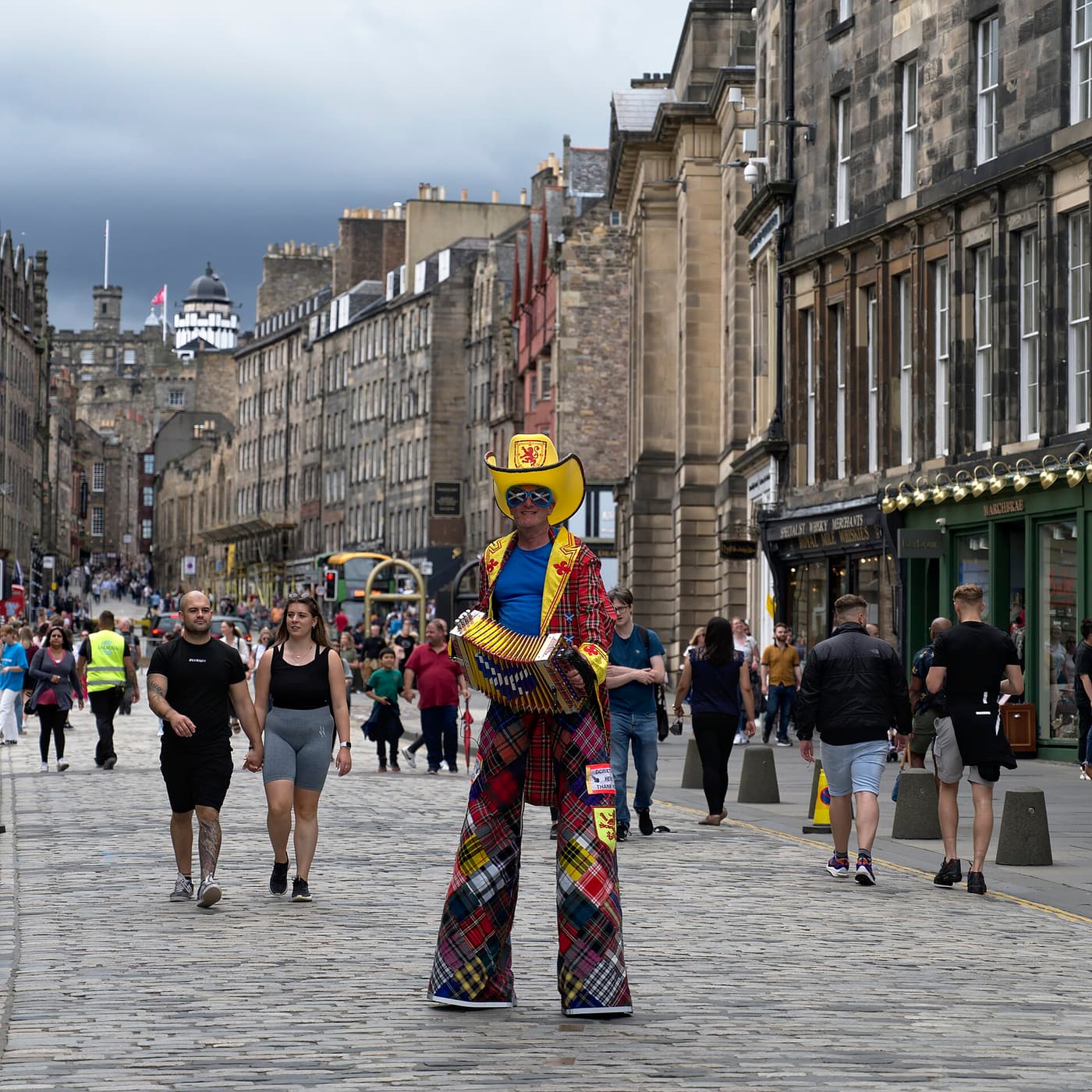
In August, Edinburgh hosts the International Festival, the Fringe, the Royal Edinburgh Military Tattoo and more, and the city’s population roughly doubles. Arthur’s Seat becomes the place to escape the crowds — and a popular grandstand for the end-of-festival fireworks when they are held. Hotel prices peak; book months ahead.
Hogmanay and winter
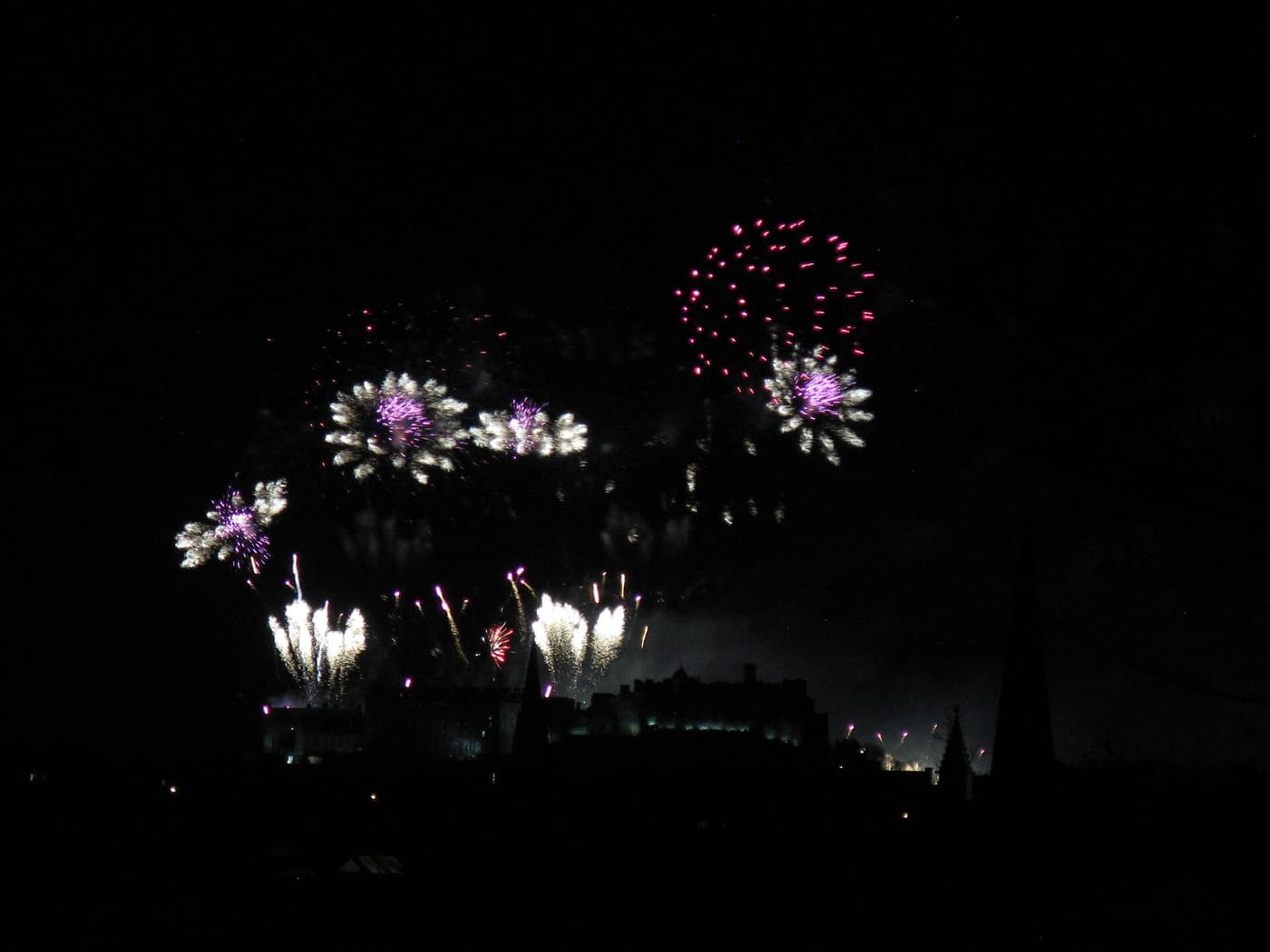
Edinburgh’s New Year celebrations run for several days around 31 December, with a street party and midnight fireworks from the castle. The hill gives a distant, free view of them, but it is dark, cold and often icy — only for the well equipped. A clear New Year’s Day walk to the summit is a local tradition.
Time of day and crowds
The summit is busiest from late morning to mid-afternoon, at weekends and throughout August. Go before 9 am or in the evening and you may share it with a handful of people. On weekdays outside summer it is rarely crowded at any hour.