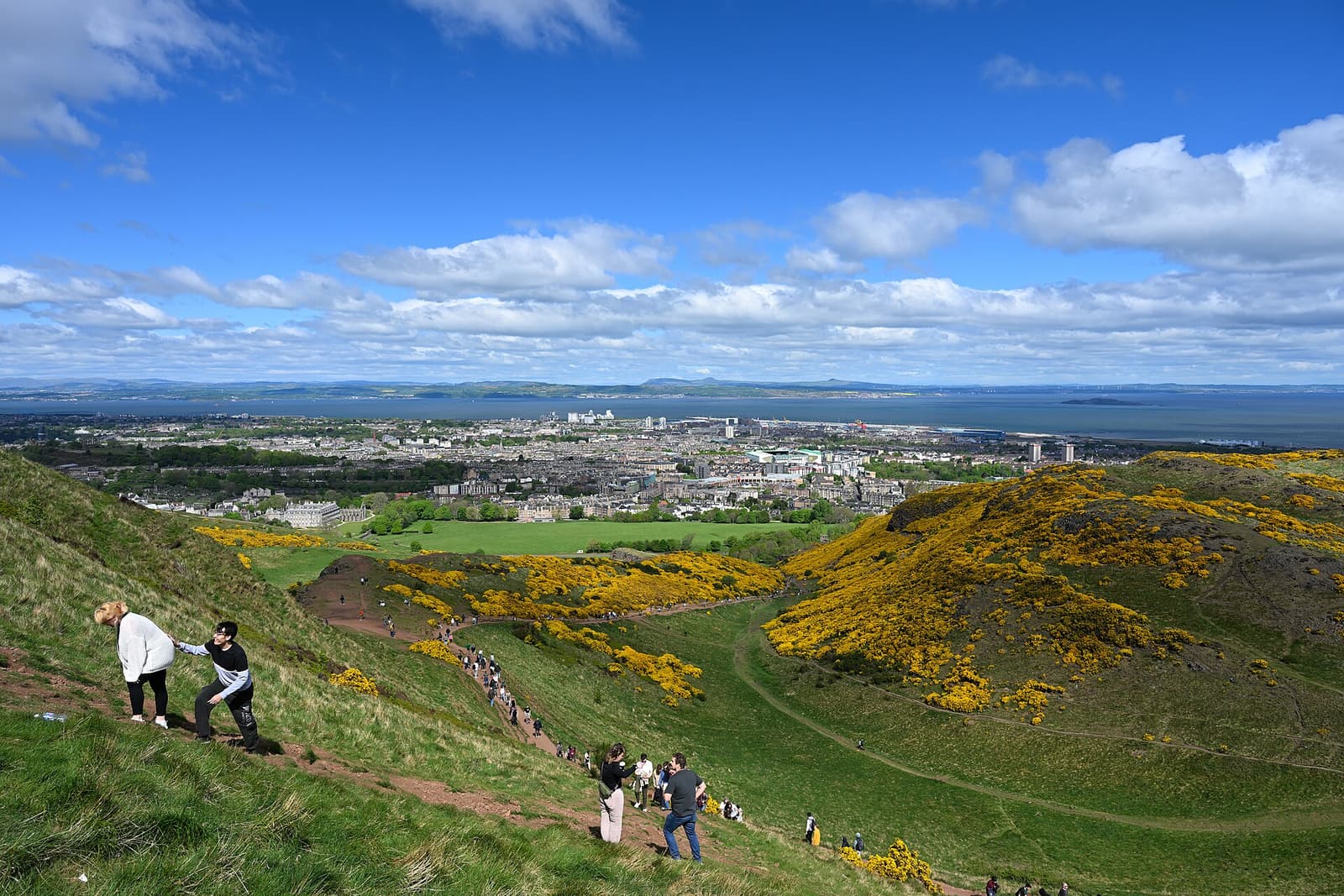
Arthur’s Seat is the 251-metre summit of an extinct volcano in Holyrood Park, a mile east of Edinburgh Castle. The climb is short, free and open at any hour — but it is a real hill, with real weather. This guide covers how to choose a route and how to enjoy it safely.
Arthur’s Seat at a glance
- Height: 251 m (823 ft) — the highest point in Edinburgh.
- Time: 1.5–2.5 hours round trip from Holyrood; under an hour from Dunsapie Loch.
- Distance: roughly 4–5 km for a loop from Holyrood.
- Difficulty: easy to moderate. Steep sections, uneven steps, bare rock at the top.
- Cost: free. No ticket, no gate, no closing time.
- Managed by: Historic Environment Scotland, whose rangers look after the park.
The routes up
1. The easy route: from Dunsapie Loch
The shortest and gentlest way. From the car park at Dunsapie Loch, high on the east side, a broad grassy path climbs straight to the summit with a brief rocky finish. There are only about 140 metres of ascent. The drawback is getting to the loch: it is a 25–30 minute walk from Holyrood, and the road is not always open to cars.
2. The classic route: from Holyrood by St Anthony’s Chapel
From the park entrance opposite the palace, follow Queen’s Drive left to St Margaret’s Loch, climb past the ruins of St Anthony’s Chapel, and continue up the grassy valley known as the Dry Dam. The path steepens at the head of the valley and joins the summit rocks from the north-east. It is the most popular route and the most varied, with good views all the way.
3. Salisbury Crags and the Radical Road
The grandest approach used to be the Radical Road beneath Salisbury Crags. Most of it has been closed since a rockfall in 2018, and at the time of writing its reopening is still under review — check current notices. You can instead walk the path along the top of the crags for the same city panorama, then drop into Hunter’s Bog and climb to the summit from there. This makes the best full circuit of the park.
4. Piper’s Walk, the Zigzag and the Gutted Haddie
From Holyrood, the level valley of Hunter’s Bog runs between the crags and the main hill, with Piper’s Walk traversing the slope above it. At its head a steep, stone-stepped zigzag path climbs the scar called the Gutted Haddie directly to the saddle below the summit. It is the fastest way up from the west — fit walkers do it in 30 minutes — but it is relentless, and slippery after rain. Many people go up this way and come down by the chapel.
| Route | Start | Time up | Grade | Best for |
|---|---|---|---|---|
| Dunsapie Loch path | Dunsapie Loch | 15–25 min | Easy | Families, quick ascents |
| St Anthony’s Chapel & Dry Dam | Holyrood | 45–60 min | Moderate | First-timers, variety |
| Top of Salisbury Crags + summit | Holyrood | 60–80 min | Moderate | Views, full circuit |
| Zigzag / Gutted Haddie | Holyrood via Hunter’s Bog | 30–45 min | Steep | Fit walkers in a hurry |
| From Duddingston | Duddingston village | 35–45 min | Moderate | Pub at the finish |
 In Holyrood Park
 Arthur’s Seat Summit
The 251-metre top of Edinburgh
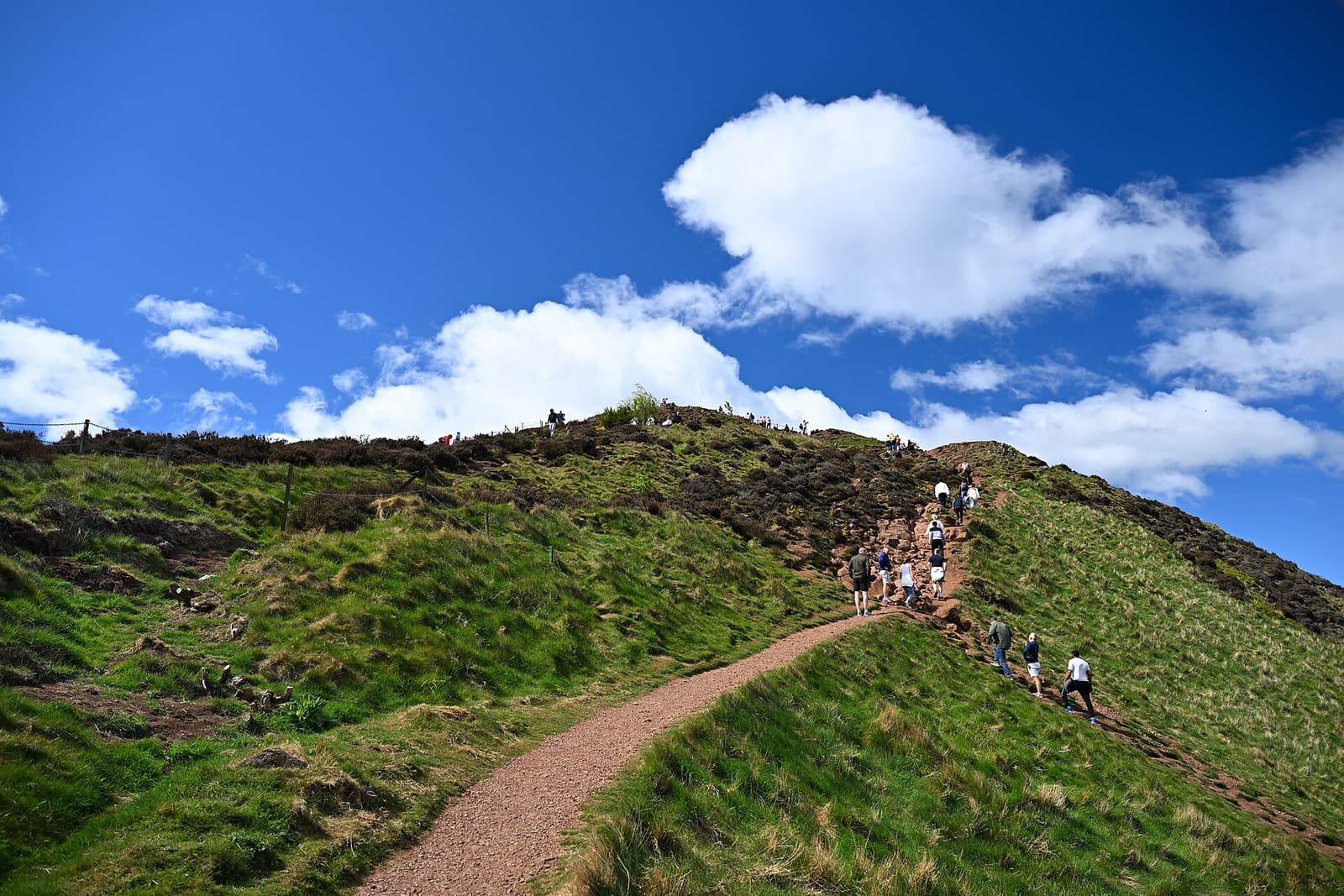
The rocky crown of an extinct volcano and the highest point in Edinburgh: 251 metres above the sea, a mile from the Royal Mile, with a 360-degree view from the castle to the Forth bridges, Fife and the Pentland Hills. It is free, open at all hours and takes most people between 30 and 60 minutes to climb.
 In Holyrood Park
 Salisbury Crags & Hutton’s Section
The cliffs where geology began
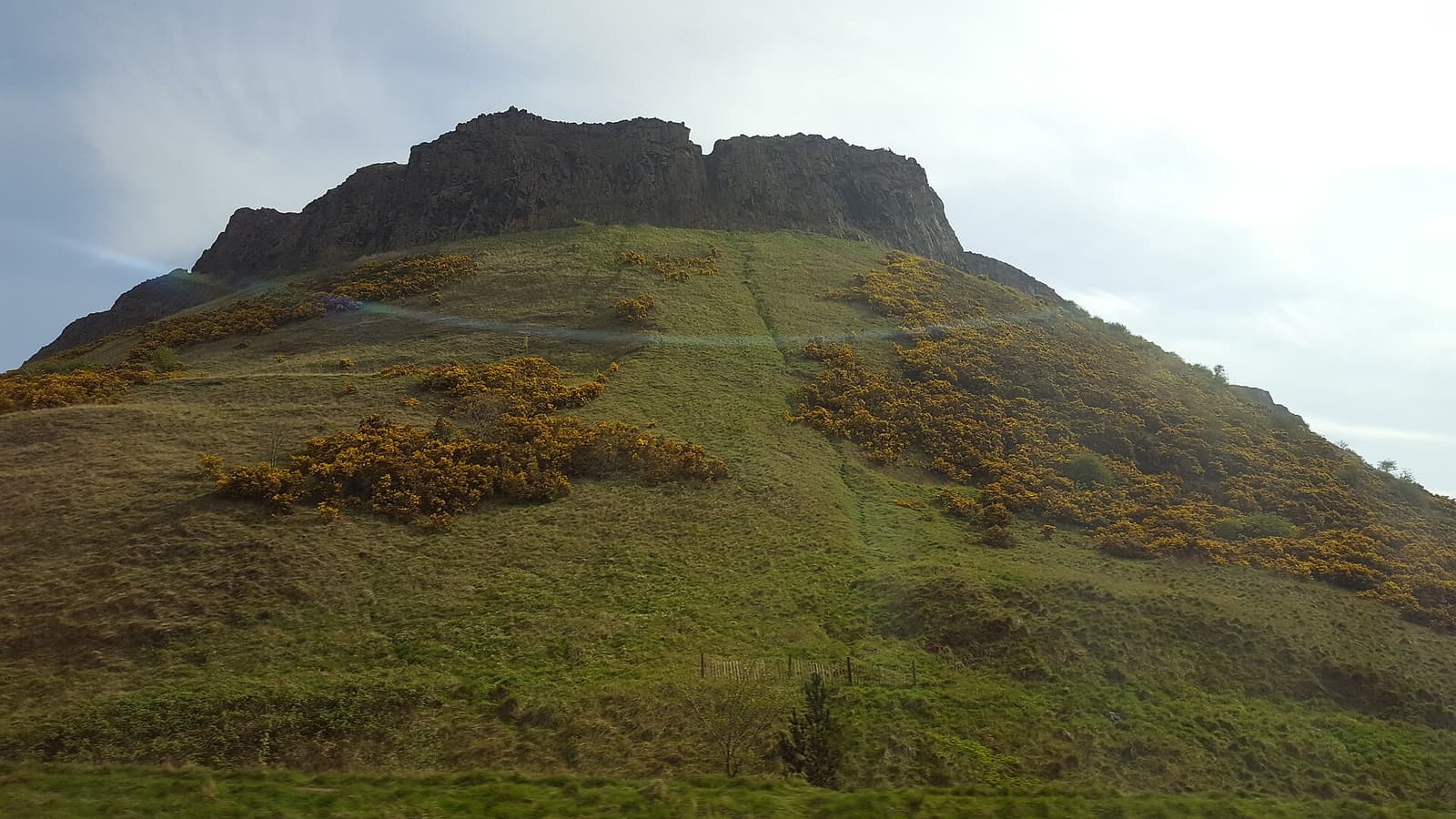
A curving wall of dark dolerite cliffs, up to 46 metres high, facing the Old Town. The Radical Road runs along their foot, the best skyline view of Edinburgh runs along their top, and at Hutton’s Section the 18th-century scientist James Hutton found evidence that changed how we understand the age of the Earth.
 In Holyrood Park
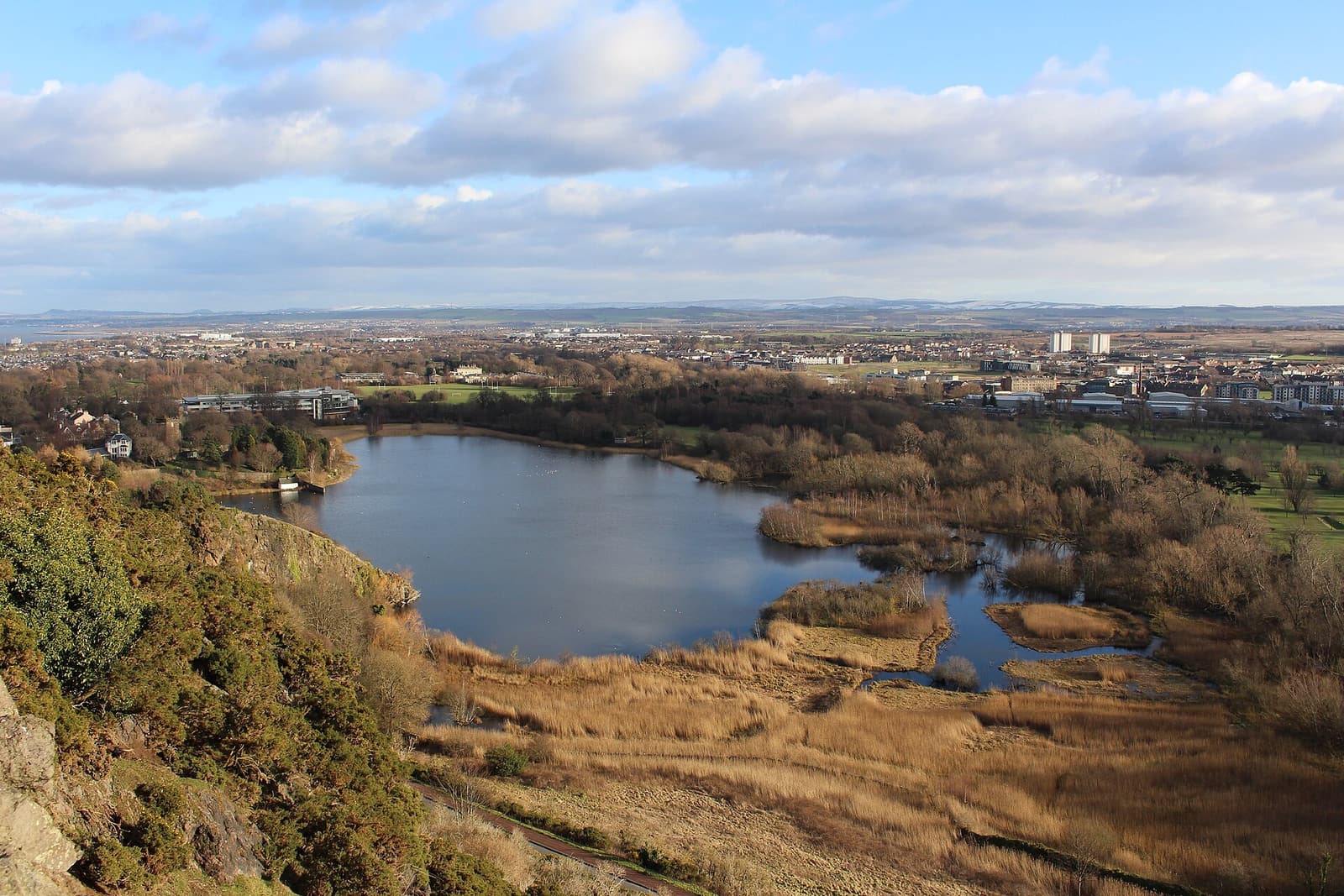
 St Anthony’s Chapel & St Margaret’s Loch
A medieval ruin above the swans
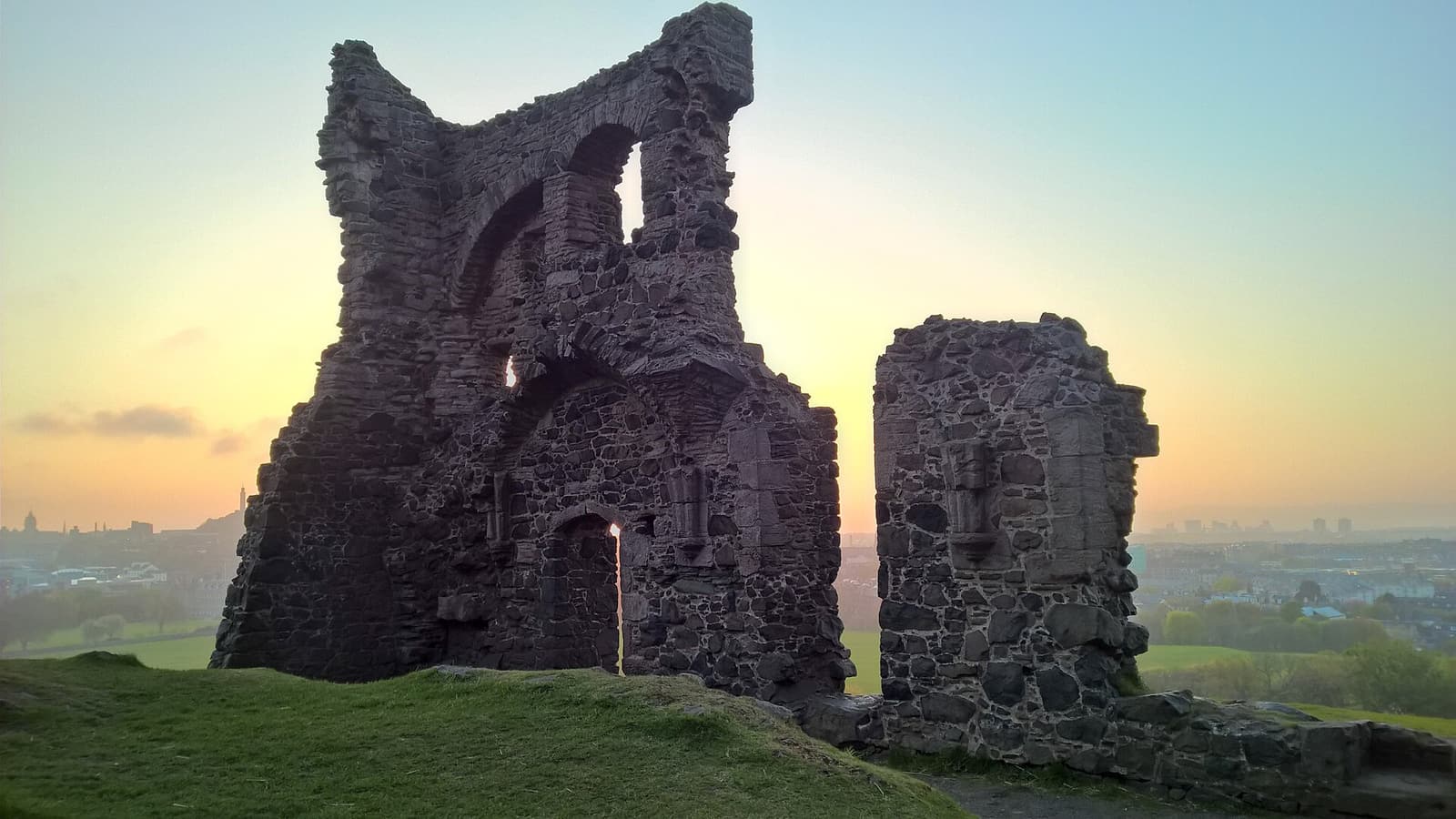
The gaunt remains of a 15th-century chapel on a rocky shelf above St Margaret’s Loch, ten minutes from Holyrood Palace. Nobody is quite sure who built it or why, which is part of its charm. With the swans on the loch below and the Forth beyond, it is the best short walk in the park.
 In Holyrood Park
 Duddingston Village & Loch
A country village and a very old pub
On the far side of the hill lies a village that still feels like the countryside: a 12th-century kirk, a reed-fringed loch that is a bird sanctuary, a secret garden, and the Sheep Heid Inn — which claims a history going back to 1360 and has a good case for being Scotland’s oldest surviving pub.
What to wear and bring
- Footwear with grip. Trainers with a good tread are fine in dry weather; walking shoes or boots are better when it is wet. Leave smooth-soled shoes and sandals at the hotel.
- A windproof layer. The summit is exposed, and Edinburgh is a windy city. It can be T-shirt weather on the Royal Mile and bitter on top.
- A waterproof. Showers arrive quickly from the west.
- Water and a snack. There is nothing for sale and no drinking water on the hill.
- A torch if you are going for sunrise or sunset. Your phone light is a poor substitute on steep ground.
Safety
People are injured on Arthur’s Seat every year, and occasionally killed — almost always in falls from steep ground or the cliffs. The risks are easy to avoid:
- Stay on the main paths, and well back from the edge of Salisbury Crags.
- Take the summit rocks slowly. They are polished and treacherous when wet or icy.
- In strong wind, choose the crags or St Anthony’s Chapel instead of the top.
- Do not shortcut down steep grass, and do not climb fences round closed paths.
- In an emergency, call 999 and ask for the police.
How the hill was made
About 340 million years ago, in the Carboniferous period, this part of Scotland lay near the equator and was dotted with volcanoes. Arthur’s Seat was one of them. What survives is its eroded core: the summit and the neighbouring Lion’s Haunch are the plugs of its vents, surrounded by lava flows and ash. Salisbury Crags are slightly younger — a sheet of magma that forced its way between layers of rock without reaching the surface. Much later, ice moving from west to east carved the whole mass into its present shape.
These rocks gave the world a new idea. James Hutton, who lived within sight of the crags, used them in the 1780s to argue that the Earth was shaped by slow processes over unimaginable time. You can see the evidence at Hutton’s Section, and the story is told at Dynamic Earth, at the foot of the cliffs.
People on the hill
The park holds the remains of four prehistoric hill forts, about 2,000 years old, and the terraces of early farmers. In the 12th century the land was given to Holyrood Abbey; in 1541 James V enclosed it with a wall as a royal park, which it has been ever since. Debtors once sheltered here under the abbey’s right of sanctuary, soldiers mutinied here in 1778, and in the 1840s and 1850s Prince Albert had the lochs made, the bogs drained and Queen’s Drive built.
Why “Arthur’s Seat”?
Nobody knows. The romantic explanation links it to King Arthur — the hill is one of many proposed sites for Camelot, and there are tales of the king and his knights asleep beneath it. Others derive it from a Gaelic phrase such as Àrd-na-Said, “height of arrows”. A third story makes the hill a sleeping dragon that ate so much it lay down and never rose. Take your pick.
The strangest tale is true. In 1836, boys found seventeen miniature coffins hidden in a cave on the hillside. Eight survive in the National Museum of Scotland, and no one has explained them.
Wildlife and plants
Holyrood Park is a Site of Special Scientific Interest. Skylarks sing over the grassland in spring, kestrels hover above the crags, and ravens and jackdaws nest on the cliffs. The lochs have swans, geese, grebes and herons. From April to June the slopes turn yellow with coconut-scented gorse, and the cliffs shelter rare plants such as sticky catchfly. Dogs are welcome but should be kept under close control, particularly in the nesting season.
Money and practicalities
Scotland uses the pound sterling; cards and contactless payment are accepted almost everywhere, and you will rarely need cash. The nearest toilets and cafés are at Holyrood — at the palace, the Parliament and Dynamic Earth — and at Duddingston. There is mobile signal across the hill. Drones may not be flown in the park without permission.
Suggested plans
- One hour: St Margaret’s Loch and St Anthony’s Chapel, or the top of Salisbury Crags.
- Half a day: the classic route to the summit and back by Hunter’s Bog, then Holyrood Palace.
- A full day: over the summit to Duddingston for lunch, back by the crags, and an Old Town ghost tour in the evening.
- A long weekend: add the castle and Royal Mile, Calton Hill at sunset, and a day trip to the Highlands.