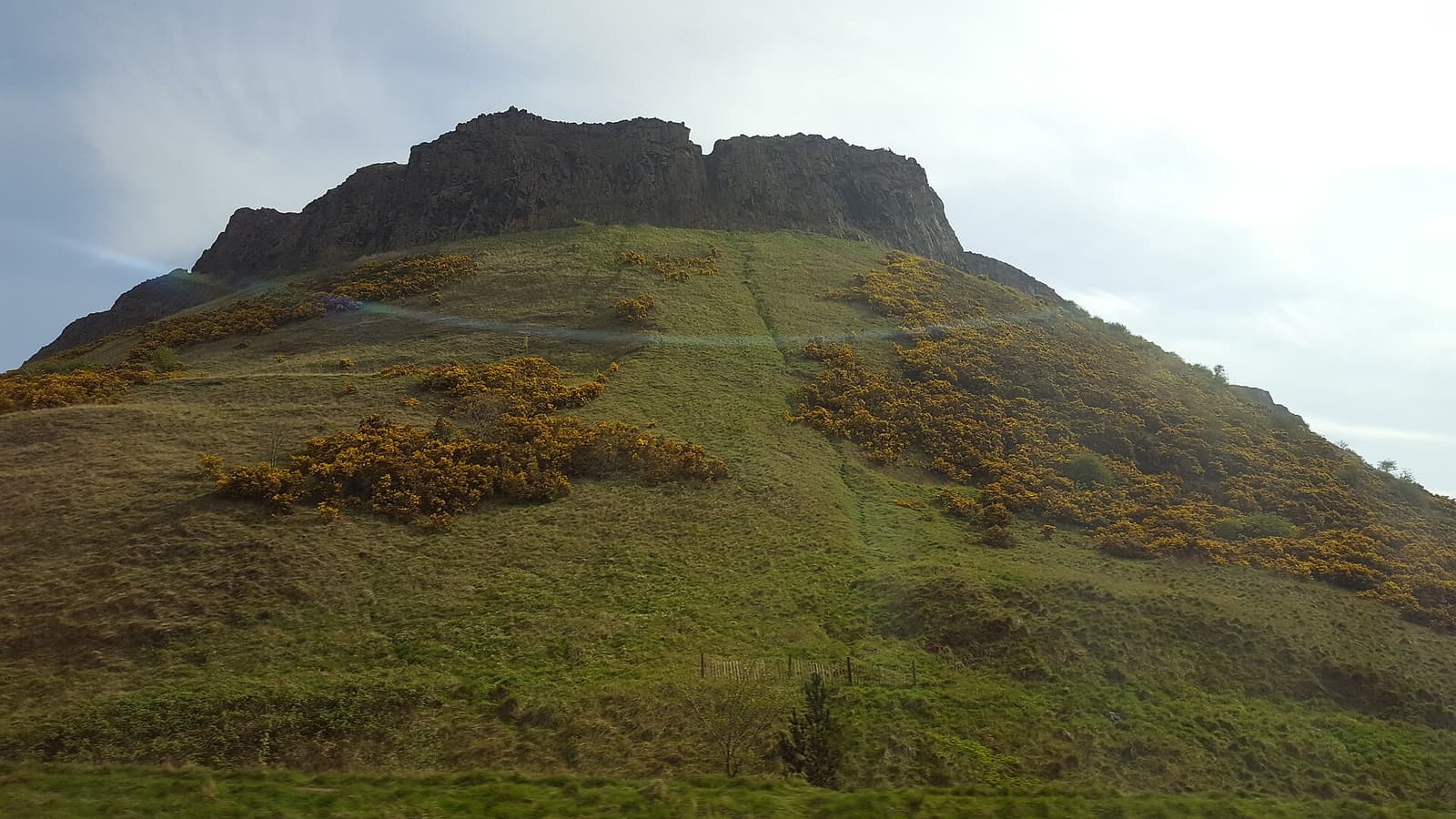
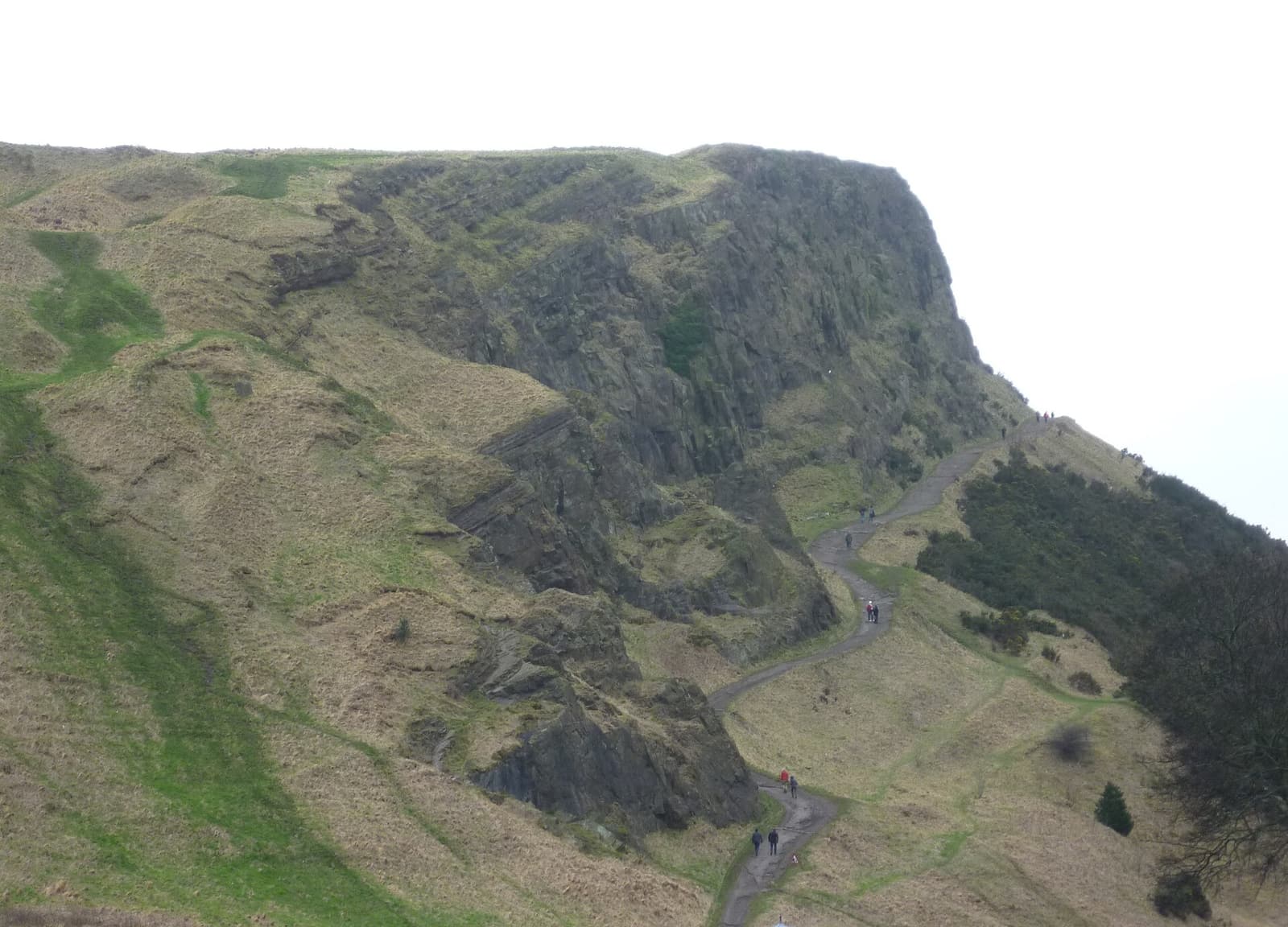
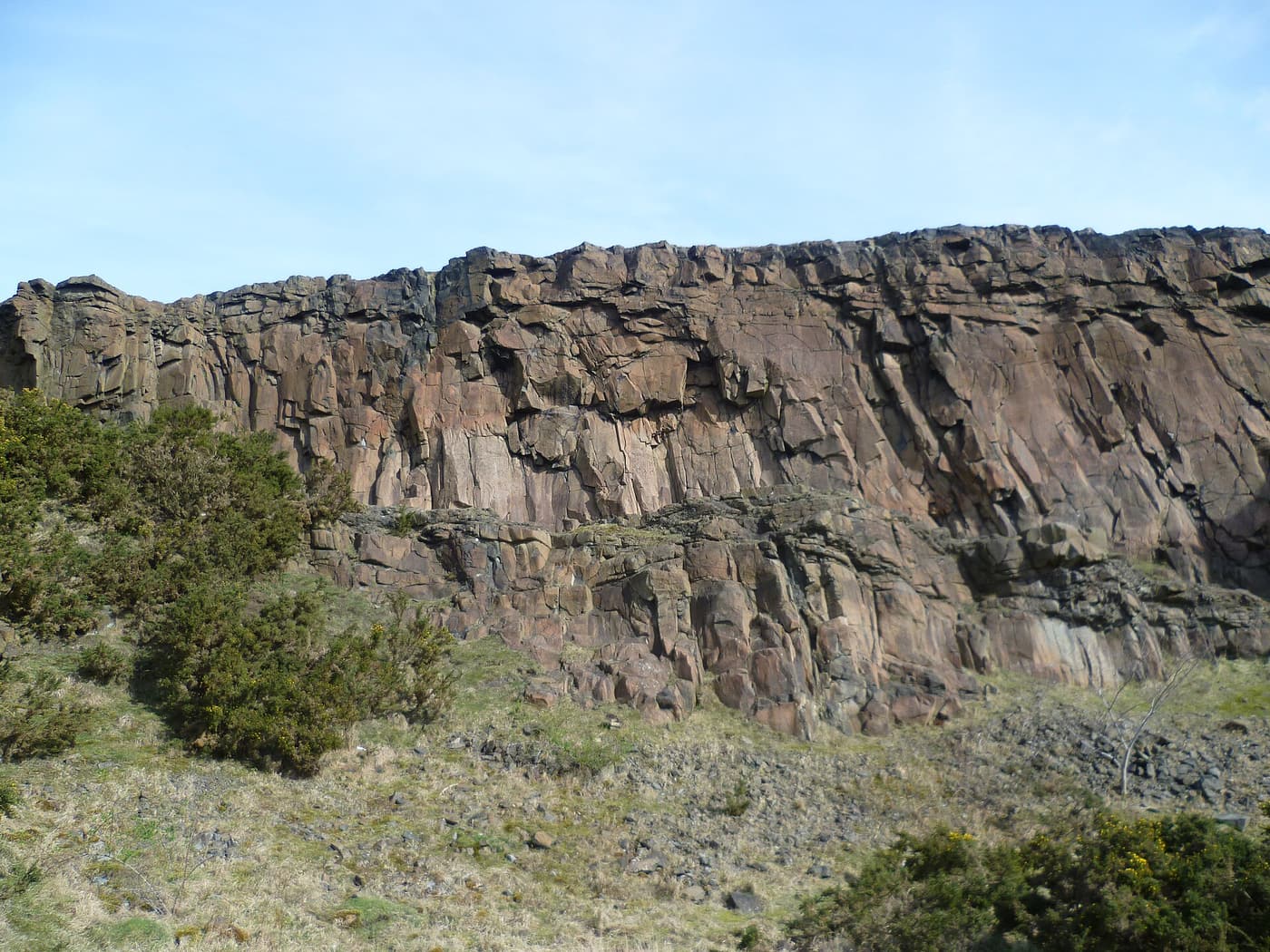
The Salisbury Crags are the long, dark line of cliffs that face the Old Town like the front of a breaking wave. They are a sill — a sheet of molten rock that squeezed between layers of older sediment and cooled into hard dolerite. Glaciers later stripped the softer rock away and left a cliff up to 46 metres high and more than half a mile long.
Beneath the cliffs runs the Radical Road, a broad track built in 1820 by unemployed weavers from the west of Scotland in the aftermath of that year’s “Radical War”, on a scheme encouraged by Sir Walter Scott. It gives one of the great city views in Britain. Much of it has been closed since a large rockfall in 2018, and its future has been under review ever since — check Historic Environment Scotland’s current notices before you plan around it.
At the southern end is Hutton’s Section. Here, in the late 1700s, the Edinburgh scientist James Hutton saw that the dark rock of the crags had been forced, molten, into the paler sandstone beneath it — proof that rocks were made and remade over an immense span of time. It is one of the places where modern geology was born.
Top things to do at Salisbury Crags & Hutton’s Section
Walk the top of the crags
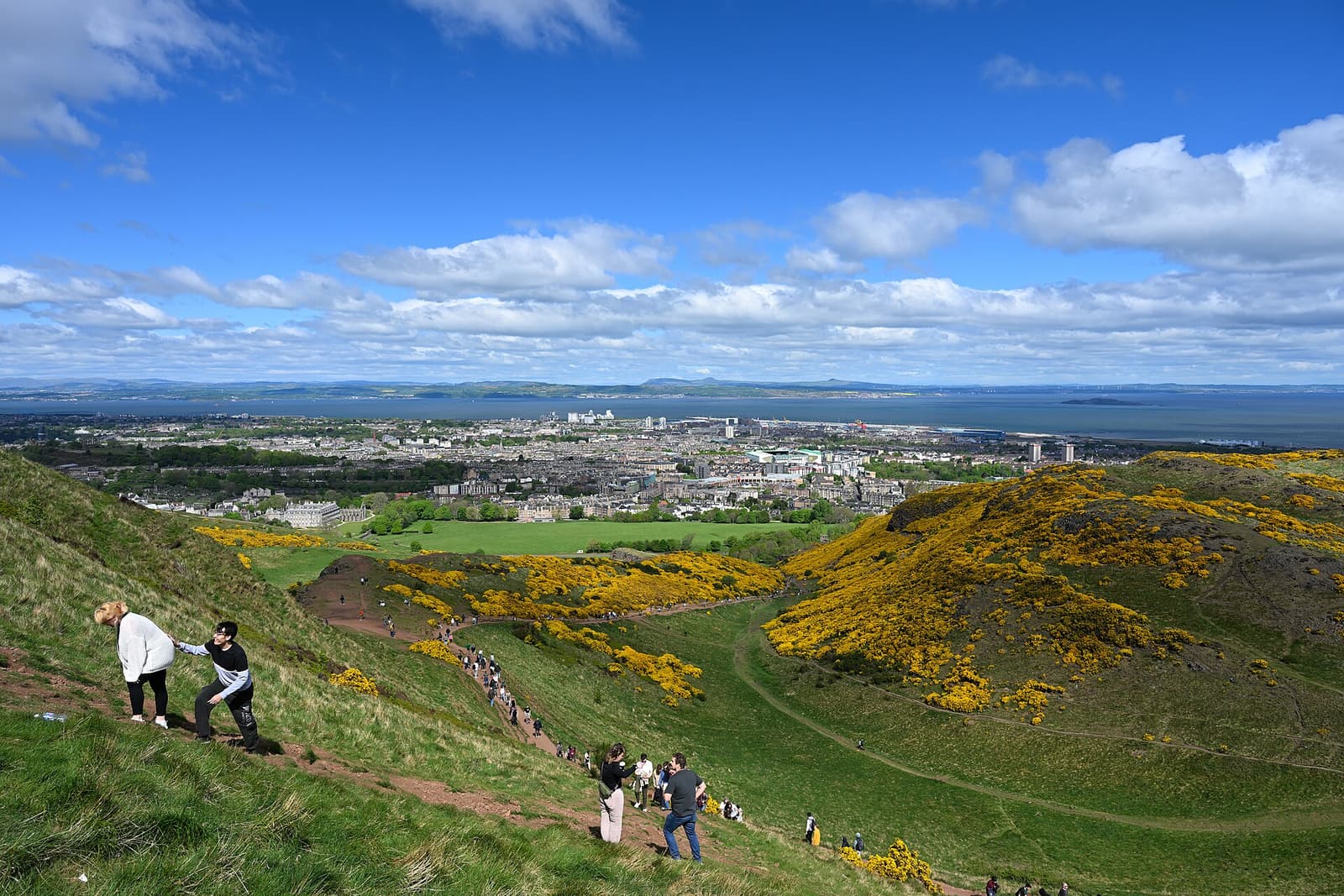
A grassy path climbs steadily along the top edge of the cliffs from near Holyrood to the high point at about 174 metres. The whole Old Town skyline — castle, St Giles’, the Scott Monument, Calton Hill — is laid out in front of you. The drop is sheer and unfenced: keep well back from the edge, especially with children and in wind.
Find Hutton’s Section
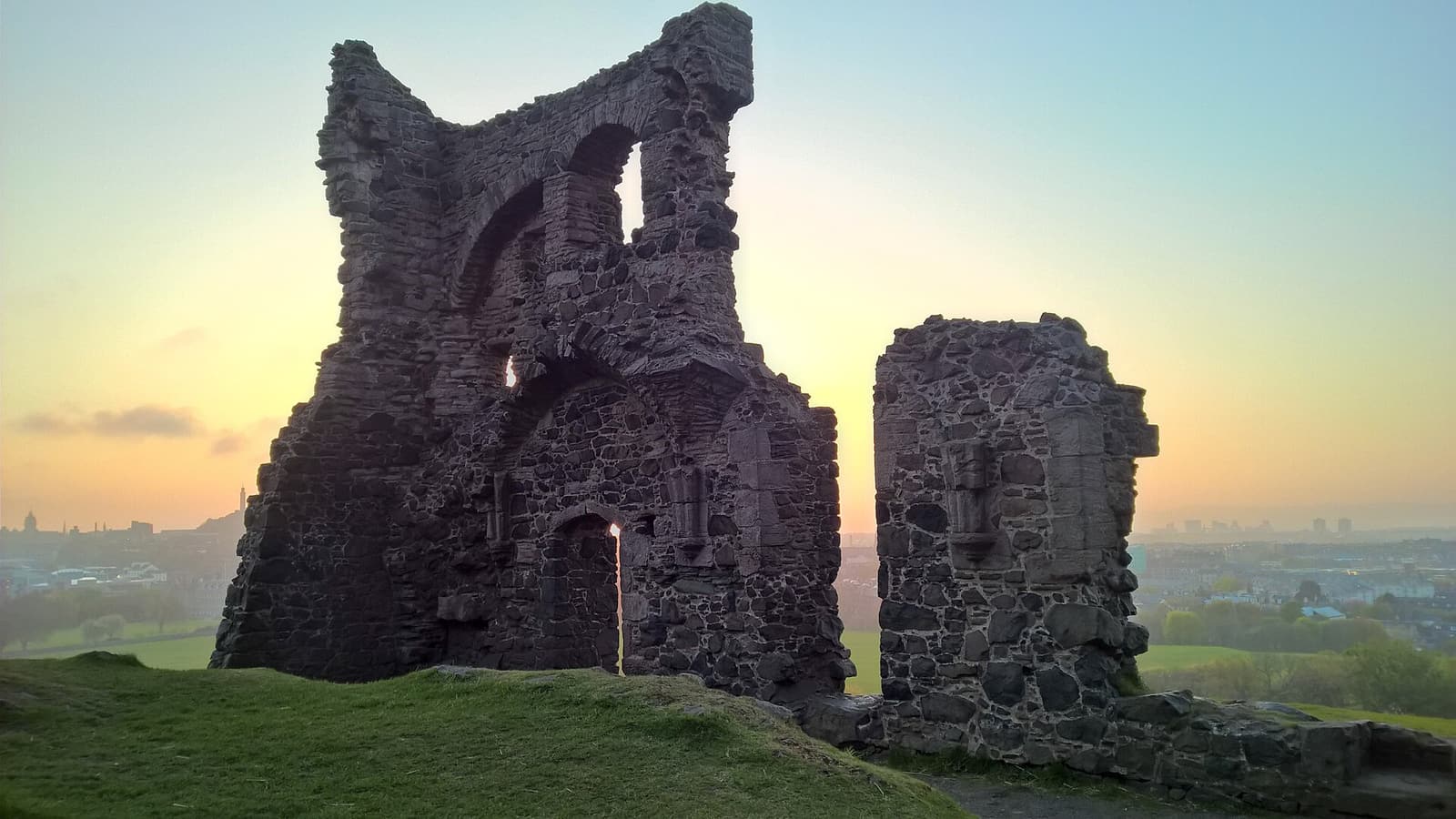
At the southern end of the crags an information board marks the exposure Hutton studied. Look for the junction where the dark, crystalline dolerite sits on — and has baked and lifted — the layered sandstone below. If the Radical Road is closed, the site may only be viewable from a distance.
Walk through Hunter’s Bog
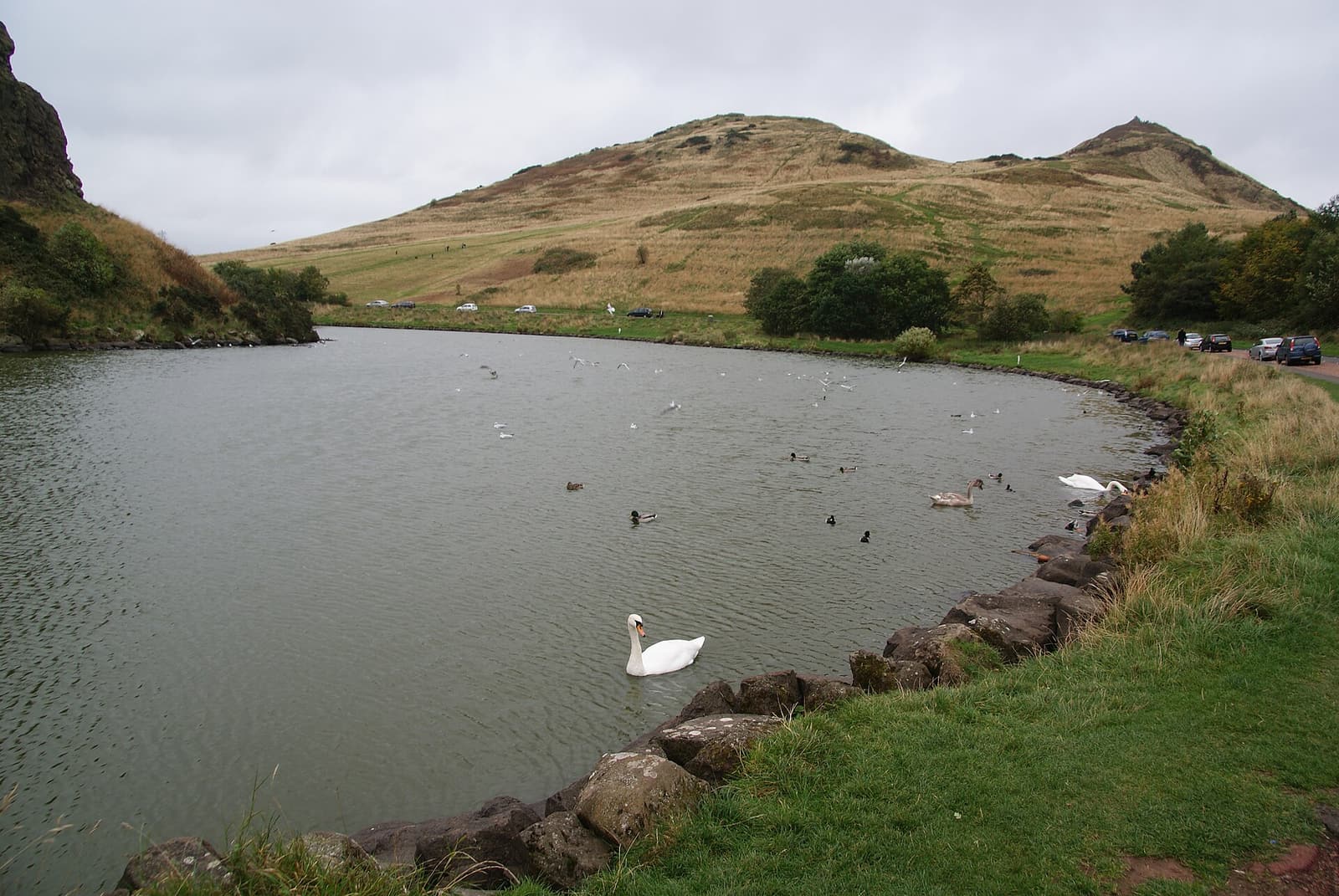
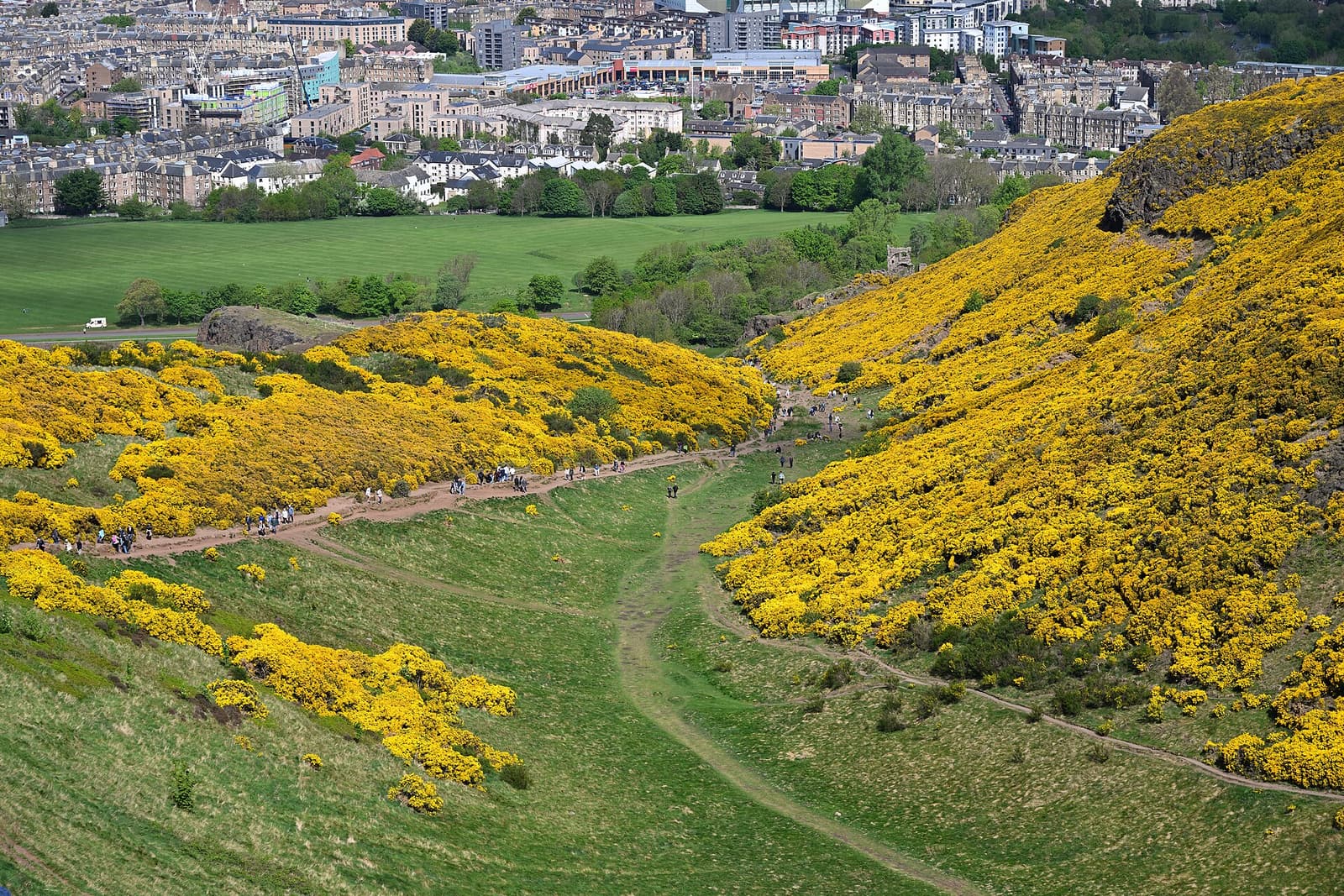
Behind the crags lies a quiet, flat-floored valley between the cliffs and Arthur’s Seat itself. A level path runs its length — the gentlest walk in the park — and Piper’s Walk runs along the slope above it, named after the Highland soldiers who camped here during a mutiny in 1778.
Take the Gutted Haddie to the summit
From the head of Hunter’s Bog a steep, stepped zigzag climbs the scar known as the Gutted Haddie (“gutted haddock”), said to have been gouged out by a cloudburst in the 18th century. It is the most direct line to the summit from this side — short, sharp and best avoided in the wet.
How to get to Salisbury Crags & Hutton’s Section
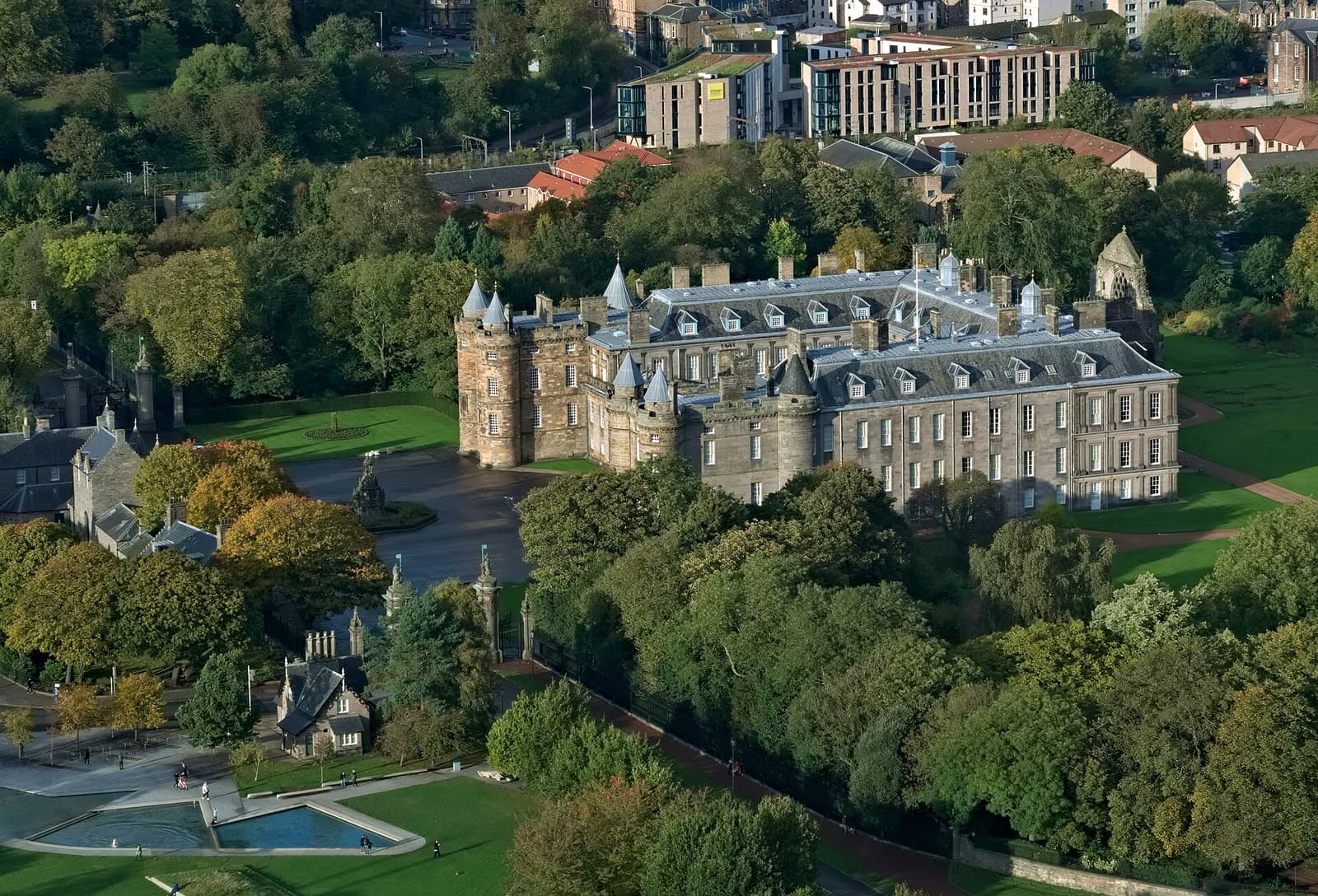
- From Holyrood: cross Queen’s Drive opposite the palace car park. The path up the back of the crags and the entrance to the Radical Road both start here, two minutes from the Scottish Parliament.
- From the south: enter the park from Holyrood Park Road, beside the Royal Commonwealth Pool, for Hutton’s Section and the southern end of the crags. Several Lothian bus routes run along nearby Dalkeith Road.
- On foot from Waverley station: about 20 minutes via the Royal Mile and the Canongate.
Insider tips
- Respect closure fences on the Radical Road. Rock does fall from these cliffs, and the closures are there for that reason.
- Late afternoon and evening give the best light on the Old Town from the top of the crags.
- Climbing on the crags is restricted and requires a permit from the park rangers.
- In spring the slopes are yellow with gorse. In dry weather it burns easily — never light fires or barbecues in the park.
Best tours & tickets for Salisbury Crags & Hutton’s Section
These top-rated experiences pair well with a visit to Salisbury Crags & Hutton’s Section:
 Guided hike from €28
 Edinburgh: Guided Hike to Arthur’s Seat and Holyrood Park
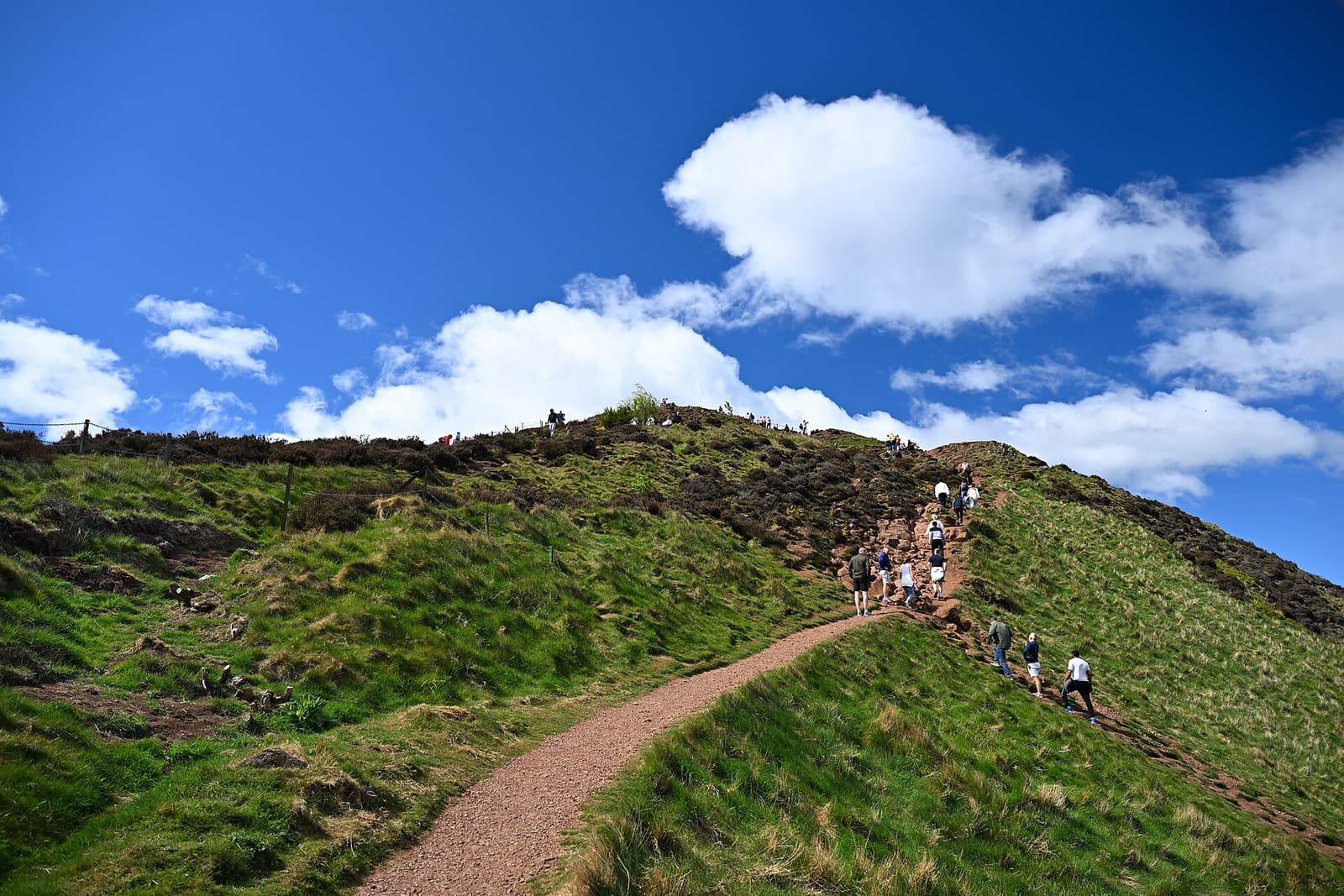
The straightforward way to climb the hill with someone who knows it: a two-hour guided walk from Holyrood through the park to the summit and back, with the story of the volcano, the royal park and the city laid out below you. Rated 4.9 by well over a hundred walkers and one of the lowest-priced guided hikes in Edinburgh.
- The summit of Arthur’s Seat at 251 m
- Volcano geology, history and legends explained
- Small group, limited to about 10 walkers
 Guided hike from €31
 Edinburgh: Hike Arthur’s Seat & Calton Hill
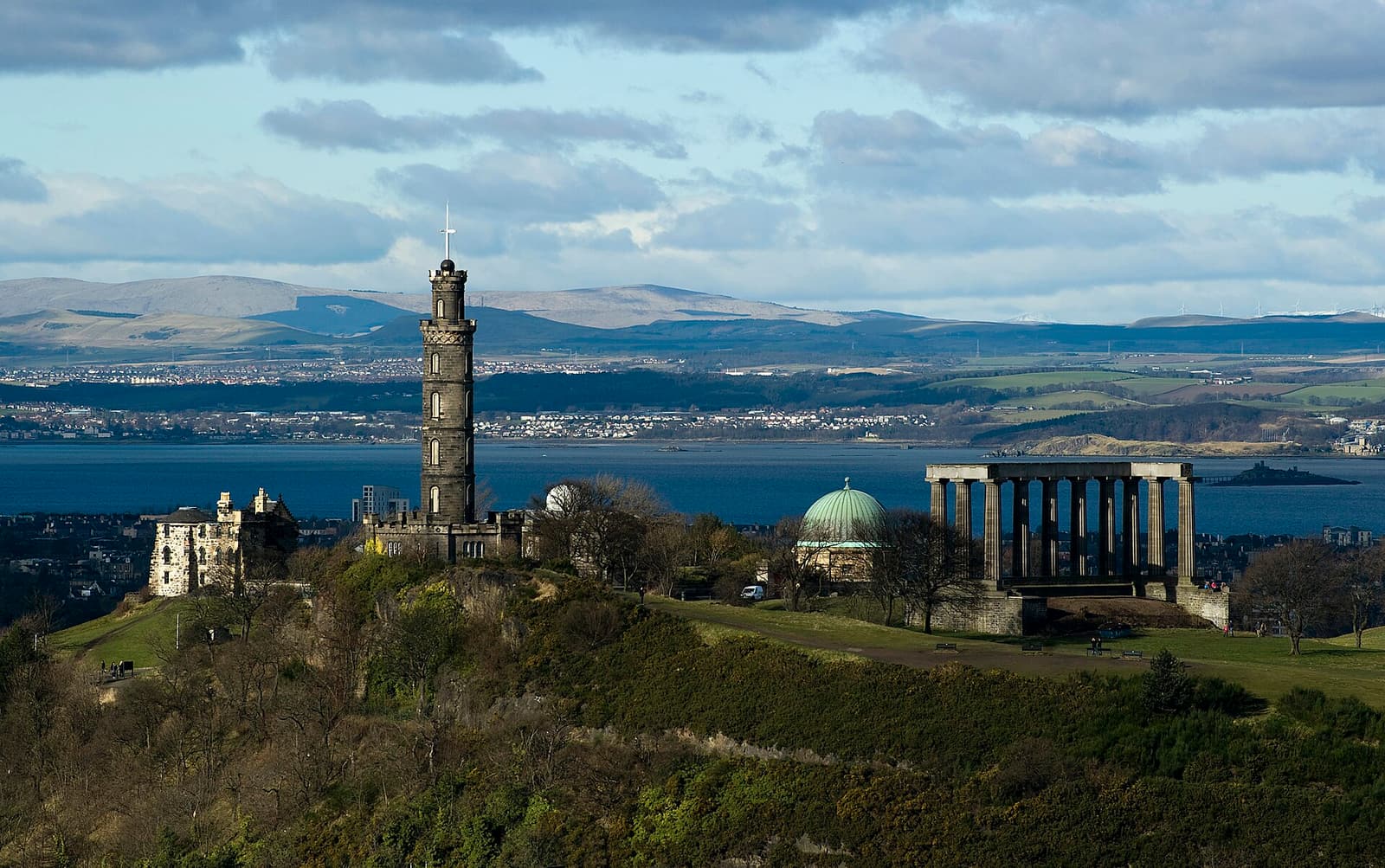
A three-hour walk that links the city’s two classic viewpoints: first the monuments of Calton Hill, then down past Holyrood Palace and the Scottish Parliament and up through Holyrood Park to the top of Arthur’s Seat. A lot of Edinburgh for the price, and highly rated.
- Two of Edinburgh’s seven hills in one morning
- Calton Hill’s monuments, then Holyrood Park
- Small group with a local guide
 Guided hike from €24
 Edinburgh: Hill & Nature Hike with a Local
A relaxed four-hour walk with a local who knows the city’s wilder corners: more time, more nature and more conversation than the two-hour summit tours. The exact route varies — read the listing to see which hills are included on your date.
- A longer, slower half-day on Edinburgh’s hills
- Wildlife, plants and local knowledge
- Very good value